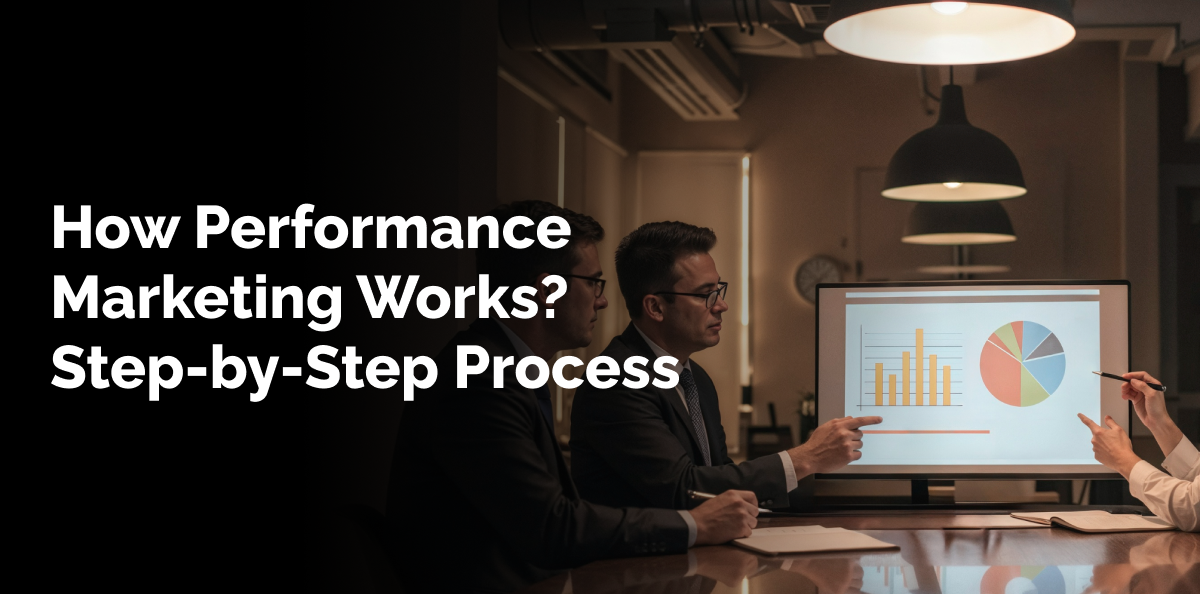
In today’s data-driven digital world, businesses want clarity, control, and measurable growth from their marketing efforts. This is exactly why many brands ask the same question: how performance marketing works and how it delivers predictable results compared to traditional marketing.
This in-depth guide explains the step-by-step process of performance marketing, from planning to optimization, in a simple and practical way. Whether you are a business owner, marketer, or beginner, this article will help you understand the complete performance marketing strategy.
What Does “Performance Marketing” Mean in Practice?
Before diving into the steps, it’s important to understand the mindset behind performance marketing.
Performance marketing is not about running ads randomly. It is about:
- Setting clear goals
- Tracking specific actions
- Optimizing campaigns using real data
Every decision is guided by numbers, not assumptions. Now let’s break down how performance marketing works, step by step.
Read More About: What Is Performance Marketing? A Complete Guide
Step 1: Define Clear and Measurable Goals
The first and most critical step in performance marketing is goal setting.
Without clear goals, performance marketing becomes just paid advertising.
Common Performance Marketing Goals:
- Lead generation (form submissions, calls)
- Sales and purchases
- App installs
- Website traffic
- Sign-ups or registrations
Each goal must be:
- Specific
- Measurable
- Action-based
📌 Example:
Instead of saying “I want more sales”, a performance goal would be:
“I want 100 purchases at a CPA of ₹500.”
This clarity is the foundation of a strong performance marketing strategy.
Step 2: Identify the Target Audience
Once goals are set, the next step is identifying who you want to reach.
Performance marketing works best when campaigns are shown to high-intent audiences.
Audience Targeting Factors:
- Demographics (age, gender, location)
- Interests and behaviors
- Search intent
- Past interactions (remarketing)
- Device and platform usage
The more precisely you define your audience, the higher the chances of conversions and the lower the cost.
📌 Wrong targeting = wasted budget
📌 Right targeting = scalable performance
Step 3: Choose the Right Performance Marketing Channels
Now comes the channel selection. Not every platform is suitable for every business.
Choosing the right channel is a key part of understanding how performance marketing works.
Popular Performance Marketing Channels:
- Search engine ads
- Social media ads
- Display and native ads
- Affiliate marketing
- Email and automation campaigns
Each channel serves a different purpose:
- Search ads capture high-intent users
- Social ads help with discovery and retargeting
- Display ads support remarketing
- Affiliate marketing works on pay-per-conversion models
A strong performance marketing strategy often uses multiple channels together.
Read More About: Performance Marketing vs. Traditional Marketing: What Performs Better?
Step 4: Create Conversion-Focused Ad Creatives
In performance marketing, creativity is not about looking good, it’s about driving action.
Ad creatives play a major role in campaign success.
Key Elements of High-Performing Ads:
- Clear value proposition
- Strong headline
- Relevant visuals or videos
- Simple and direct messaging
- Clear call-to-action (CTA)
📌 Examples of effective CTAs:
- Get a Free Quote
- Book a Demo
- Buy Now
- Sign Up Today
Testing multiple creatives helps identify what resonates best with your audience.
Step 5: Build Optimized Landing Pages
Even the best ads will fail if the landing page is weak.
Landing pages are where conversions actually happen.
What Makes a High-Converting Landing Page?
- Message match with the ad
- Clear headline and subheading
- Fast loading speed
- Mobile-friendly design
- Simple form or checkout process
- Trust signals (reviews, testimonials)
In performance marketing, ads bring traffic, but landing pages convert traffic.
This step is often underestimated but is crucial in the overall performance marketing strategy.
Read More About: How Can I Increase the Traffic on My Website? A Complete Guide
Step 6: Set Up Accurate Tracking and Analytics
Tracking is the backbone of performance marketing.
If you cannot track it, you cannot improve it.
What Should Be Tracked?
- Clicks
- Impressions
- Conversions
- Cost per action
- Revenue generated
Tracking tools help marketers understand:
- Which ads are performing
- Which audiences convert best
- Where users drop off
- What needs optimization
Accurate tracking ensures that every decision is data-backed, not guesswork.
Step 7: Launch Campaigns and Monitor Performance
After setup, campaigns go live—but the work doesn’t stop here.
Performance marketing requires continuous monitoring.
Key Metrics to Watch:
- CTR (Click-through rate)
- CPC (Cost per click)
- CPA (Cost per acquisition)
- Conversion rate
- ROAS (Return on ad spend)
Daily monitoring helps identify:
- Winning ads
- Underperforming creatives
- Budget leaks
- Audience fatigue
📌 Successful marketers don’t “set and forget”, they observe and react.
Step 8: Optimize Campaigns Based on Data
Optimization is what truly explains how performance marketing works in the long run.
Based on performance data, marketers:
- Pause low-performing ads
- Scale high-performing campaigns
- Improve targeting
- Refine creatives
- Adjust budgets
Common Optimization Actions:
- A/B testing ad copies
- Testing new audiences
- Improving landing page conversion rates
- Adjusting bidding strategies
Optimization turns average campaigns into high-performing growth engines.
Step 9: Scale Winning Campaigns
Once a campaign becomes profitable, the next step is scaling.
Scaling means increasing results without hurting ROI.
Ways to Scale Performance Marketing:
- Increase budgets gradually
- Expand to new audiences
- Launch on new platforms
- Introduce new creatives
- Upsell or cross-sell offers
Smart scaling is what separates short-term success from long-term growth.
Step 10: Analyze, Learn, and Improve Continuously
Performance marketing is not a one-time activity, it’s a continuous cycle.
After each campaign:
- Analyze what worked
- Identify what failed
- Apply learnings to future campaigns
This feedback loop helps businesses:
- Reduce costs over time
- Increase conversion rates
- Build predictable revenue systems
This continuous improvement mindset defines a mature performance marketing strategy.
How Performance Marketing Works as a Full Cycle
To summarize, here’s the complete flow:
- Define clear goals
- Identify target audience
- Select the right channels
- Create performance-driven ads
- Build optimized landing pages
- Set up tracking
- Launch and monitor campaigns
- Optimize using data
- Scale winning strategies
- Repeat and improve
This structured approach is what makes performance marketing measurable, scalable, and profitable.
Common Mistakes in Performance Marketing
Even though the process is clear, many businesses fail due to these mistakes:
- Running ads without clear goals
- Poor audience targeting
- Weak landing pages
- No conversion tracking
- Lack of optimization
- Chasing vanity metrics
Avoiding these mistakes can significantly improve results.
Final Thoughts: How Performance Marketing Works in Reality
So, how performance marketing works is simple in concept but powerful in execution.
It is a system where:
- Every action is tracked
- Every rupee is accountable
- Every decision is data-driven
When executed correctly, performance marketing becomes one of the most reliable ways to grow a business online.
FAQs: How Performance Marketing Works
How performance marketing works step by step?
Performance marketing works by setting clear goals, targeting the right audience, running measurable campaigns, tracking results, optimizing based on data, and scaling winning strategies.
What is the first step in performance marketing?
The first step is defining clear and measurable goals such as leads, sales, or app installs. Without goals, performance marketing cannot be optimized.
How long does it take to see results from performance marketing?
Results can be seen within days or weeks, depending on the industry, competition, budget, and campaign optimization. Lead generation campaigns usually show faster results than brand-focused campaigns.
What tools are used to track performance marketing?
Performance marketing uses analytics and tracking tools to monitor clicks, conversions, cost per acquisition, and return on ad spend. Accurate tracking ensures data-driven decisions.
Is performance marketing suitable for beginners?
Yes. Performance marketing is beginner-friendly if campaigns are structured properly, tracking is set correctly, and optimization is done regularly.
What is a performance marketing strategy?
A performance marketing strategy is a structured plan that defines goals, audiences, channels, creatives, tracking methods, and optimization processes to achieve measurable results.
Can performance marketing work without a website?
It can, but performance marketing works best with optimized landing pages or websites that convert traffic effectively.
Why is optimization important in performance marketing?
Optimization helps reduce costs, improve conversion rates, and scale profitable campaigns using real performance data.